Heroboard, Part 2 — remote-development transparency without manual reports
An active-work tracker connects time with projects, tasks and AI contribution, giving developers insight into their rhythm and teams a shared picture without constant stand-ups.
Task
Remote work is difficult to read from the outside. Online status does not equal productivity, card counts distort contribution, and raw hours rarely explain what moved forward. The team needed transparency without daily reports or invasive employee monitoring.
Project story
Track activity in the open app
Heroboard receives heartbeat events from plugin and desktop clients and records which app is open. Time is credited only while the user is active, so idle periods do not become work hours.
Separate human and AI contribution
Events are marked as human- or agent-initiated. Autonomous agent time is shown separately and is never presented as developer presence.
Provide context instead of surveillance
Work sessions connect to categories, apps, projects and tasks. Personal detail helps the developer while the team receives an aggregate view.
Connect time with outcomes
Activity is read alongside cycle time, lead time, rework, WIP, completed tasks and releases. The product shows work flow rather than a contest in hours.
What we built
- →Heartbeat API for the Claude Code plugin and desktop clients
- →Batch event replay after offline work
- →Separate human and agent activity
- →Work sessions with idle gaps and activity categories
- →Personal statistics for day, week and month
- →Team dashboard with activity, online presence, WIP and stuck work
- →Focus time, AI share, cycle time, lead time and rework metrics
The product in use
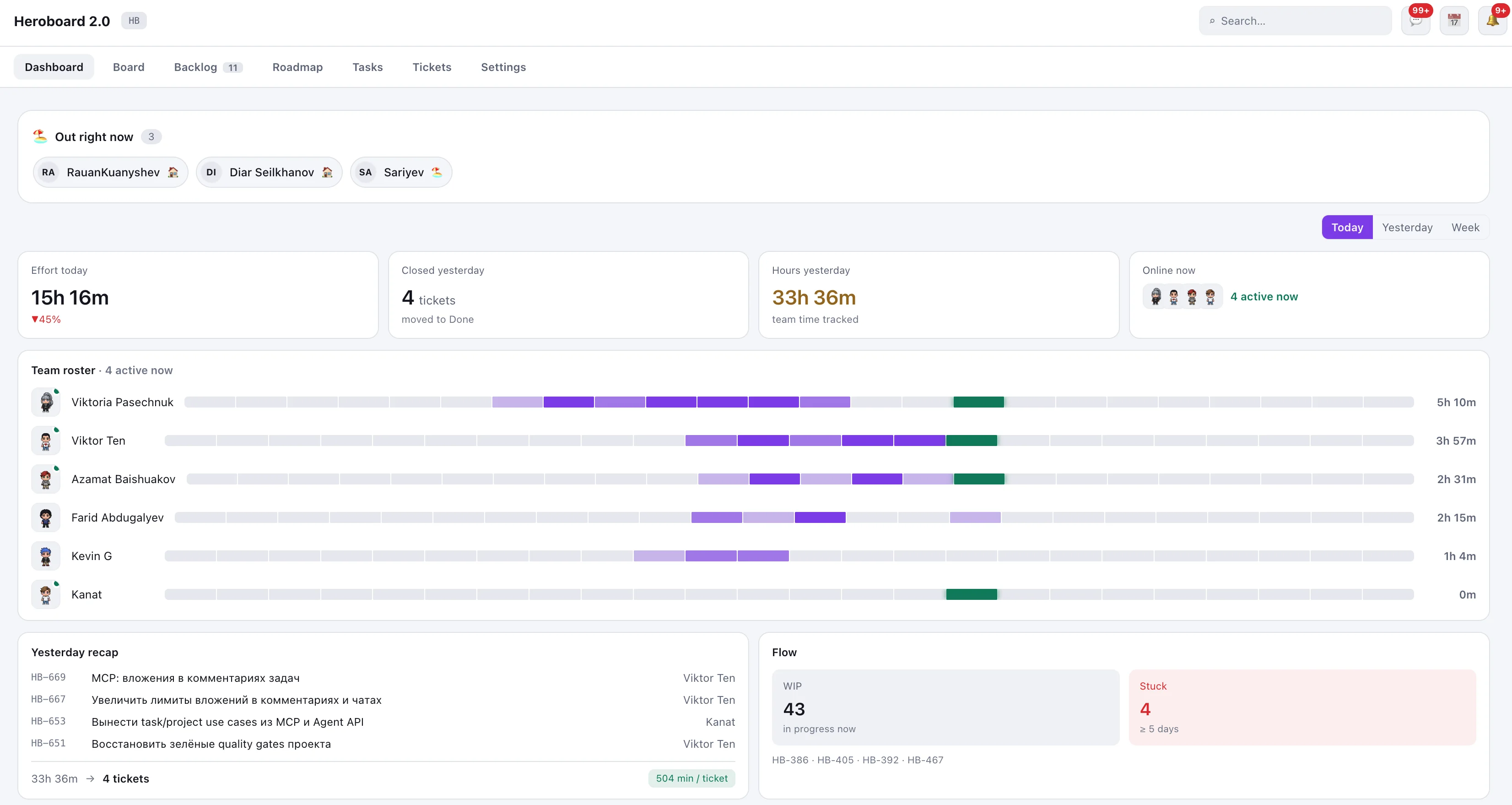
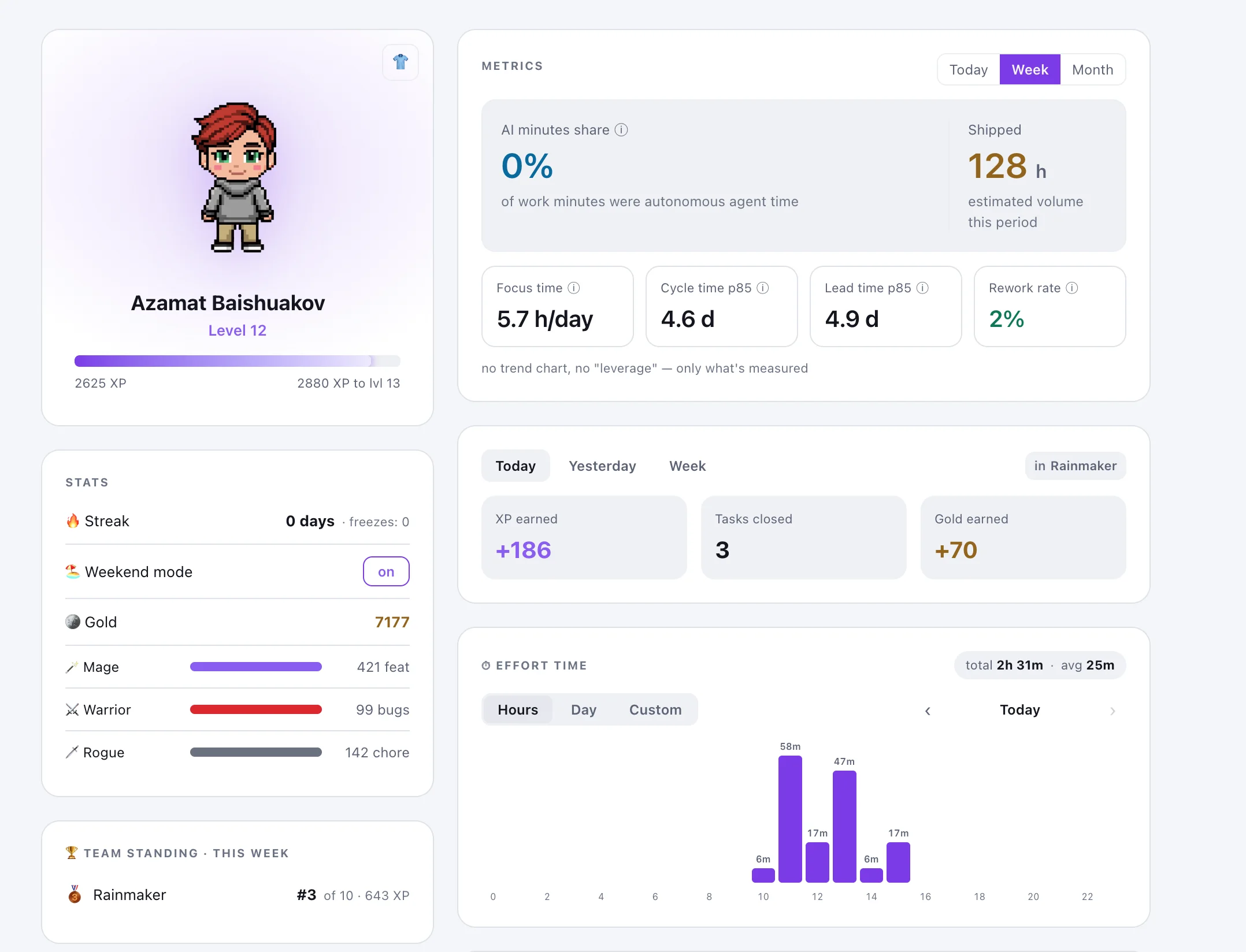
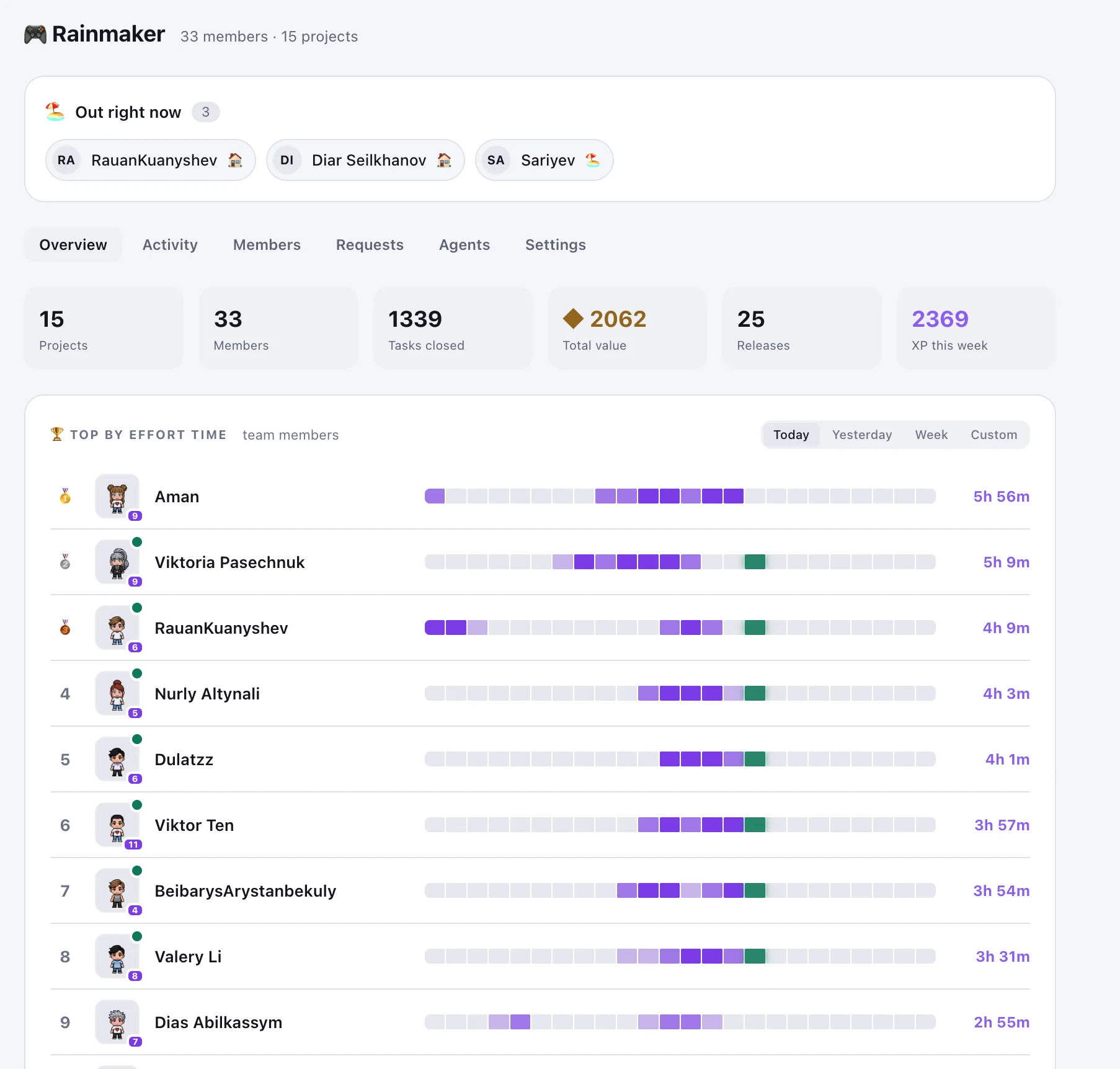
Result
Heroboard gives remote teams transparency without asking people to continuously prove they are working. Developers understand their own rhythm while team leads receive an aggregate view of project movement. The effort table remains a navigation signal, not a ranking of employee value.
Project website