Heroboard, Part 3 — game mechanics for real developer work
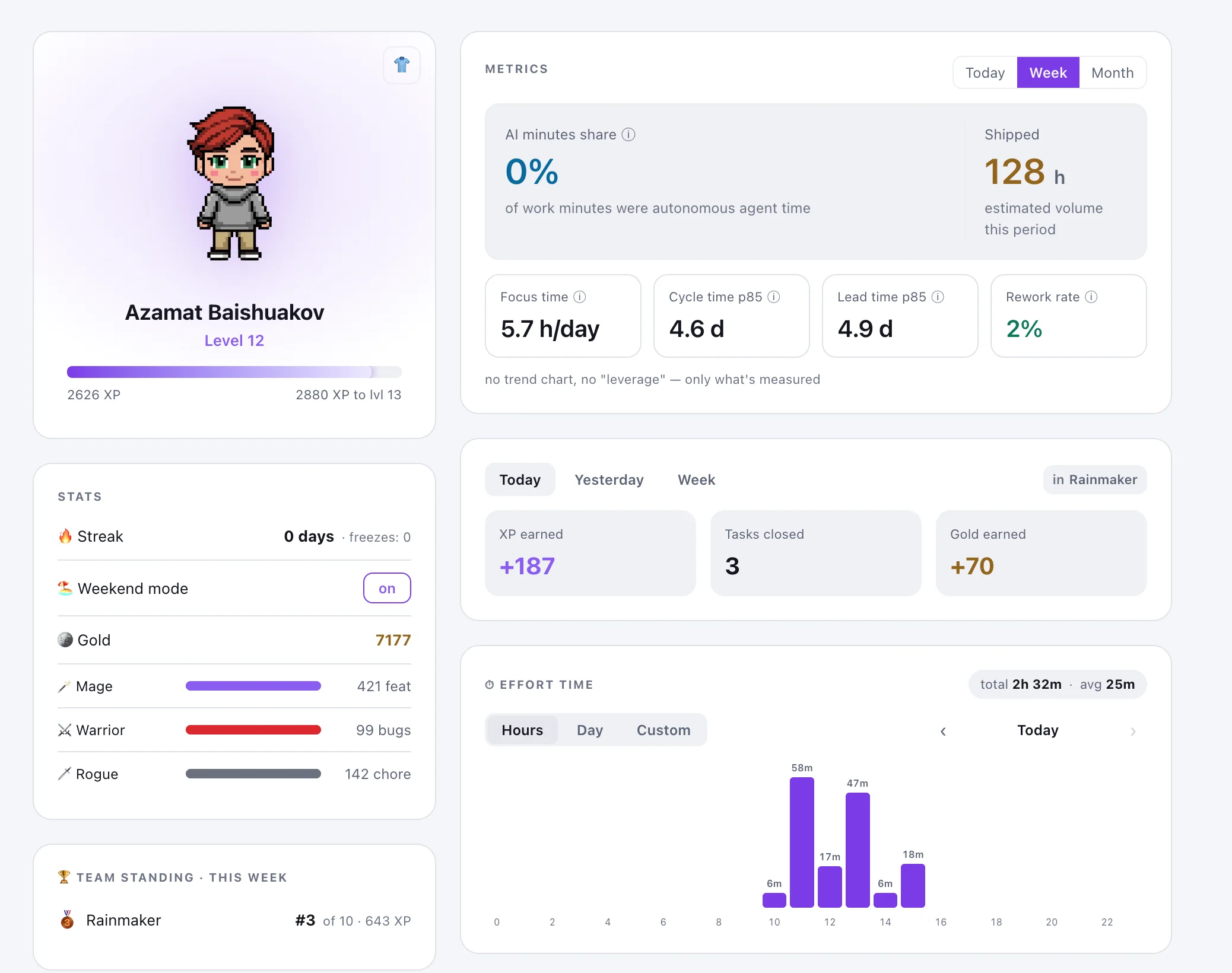
A game layer for software delivery: active work and completed tasks become XP and Gold, the hero levels up, and rewards can be spent on collectible items.
Task
Digital work provides weak emotional feedback: a difficult day may end with only a few closed cards. A conventional time tracker asks developers to start a timer and report their hours. We wanted to reverse that exchange by giving developers a personal reward for useful work and supporting a consistent rhythm without managerial pressure.
Project story
Work becomes experience
Active minutes and completed tasks award XP. A hard debugging day still moves the hero forward even when no card reaches Done.
Outcomes earn Gold
Completed and scored tasks award Gold. XP determines the level and is never spent; Gold is a separate reward currency.
Progress gets a face
Every user has a pixel hero, inventory and equipment. Personal progress carries across projects and is not reduced to comparison with colleagues.
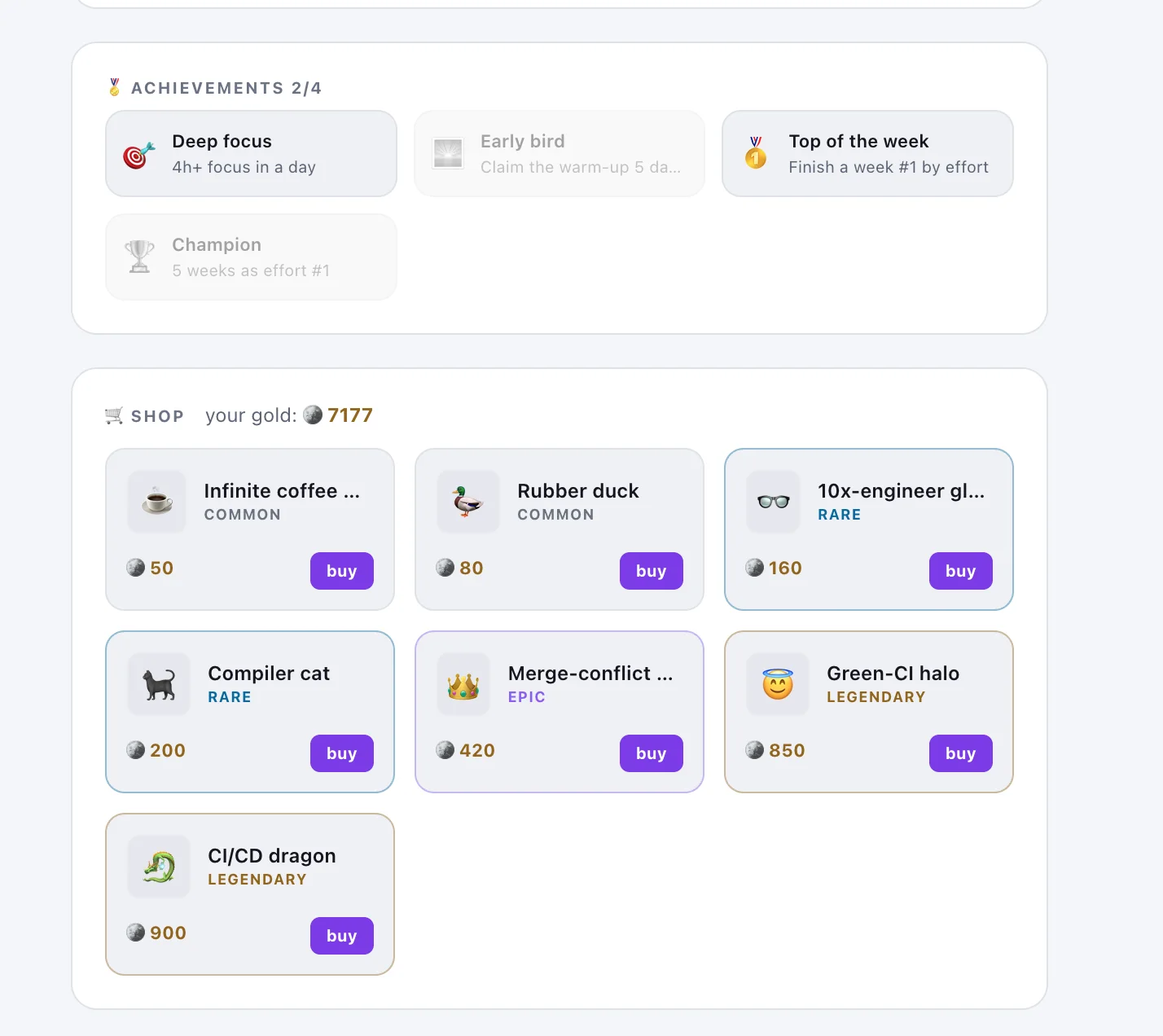
The shop creates the next goal
Items vary by price and rarity. Achievements mark completed goals while the shop creates clear short-term targets between major releases.
What we built
- →One persistent hero across personal and team projects
- →XP, levels, Gold and an immutable rewards ledger
- →Rewards for active work and completed tasks
- →Separate weighting for human and autonomous AI activity
- →Inventory, shop, prices, rarities and level requirements
- →Achievements, streaks, classes and team standings
- →Protection against duplicate rewards and trivial task farming
The product in use
Result
Gamification became more than decoration around a task tracker: it gives users a reason to return. Useful actions produce immediate feedback, and enabling tracking supports not only team transparency but also the developer’s own progress. We treat its retention impact as a measurable product hypothesis, not a claimed percentage improvement.
Project website